

High-Functioning Anxiety
High-functioning anxiety does not look like anxiety.
It looks like the professional who is always prepared, the founder who anticipates every risk, the consultant who replies to emails at 11pm not because anyone asked, but because the discomfort of unresolved items is worse than the effort of clearing them. It looks like diligence and drive.
From the outside, these people appear to be managing well, while internally they are running a nervous system that has not switched off in years.
High-functioning anxiety is not a formal DSM diagnosis but a clinical pattern anxiety that drives performance rather than stopping it, anxiety that is internalised rather than visible, anxiety that the person and everyone around them reads as personality rather than pathology. It is one of the most consistently underdiagnosed presentations in working adults, precisely because it produces competence as a side effect.
This page covers what high-functioning anxiety is, how it presents clinically, why it gets missed, what it does to the body and mind over time, and what a structured psychiatric evaluation and treatment involves.
This is not reassurance it is clinical information for adults who are tired of being told that what they feel is just how driven people live.
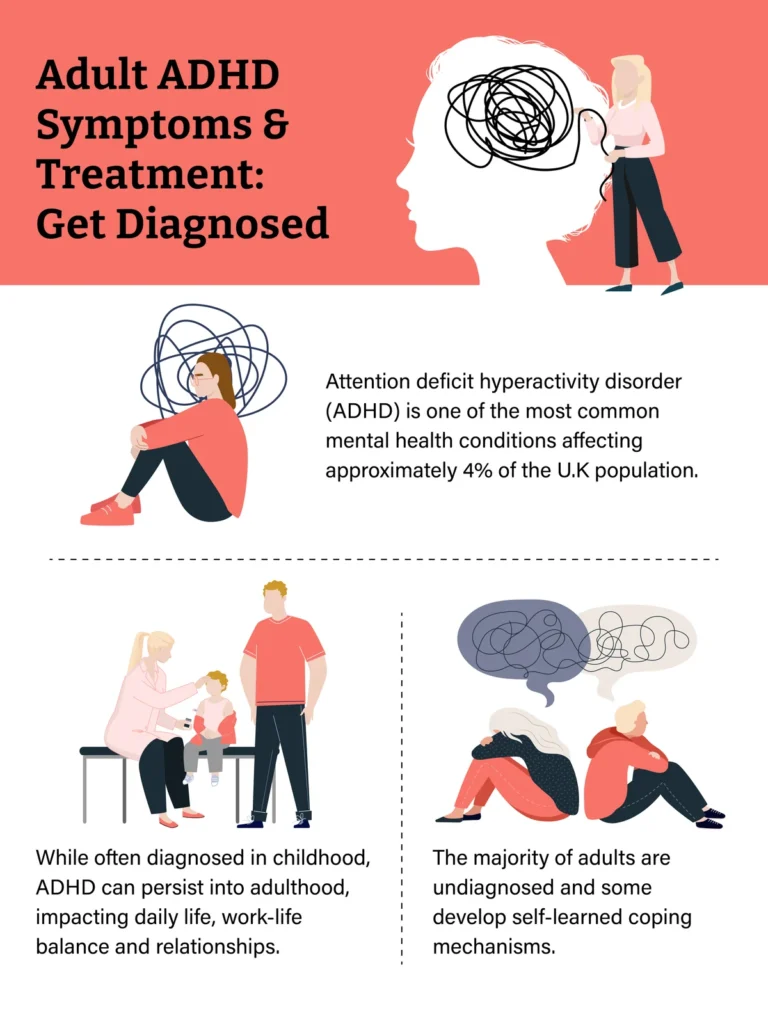
What is High-Functioning Anxiety: A Clinical Framework
Anxiety is a physiological and psychological state characterised by activation of the brain’s threat-response system the mechanism for detecting and responding to danger. In evolutionary terms this system is adaptive but in modern professional life it frequently becomes maladaptive: chronically activated in response to perceived threats like deadlines, social evaluation, uncertainty and failure that are cognitively real but not physically dangerous.
High-functioning anxiety is anxiety present at clinically significant levels that does not visibly impair performance and in many cases actually improves short-term performance, through the hypervigilance that produces thorough preparation, the anticipatory worry that identifies risks before they materialise, and the restlessness that prevents complacency. These features make it difficult to identify as a clinical problem, because the person and those around them experience the anxiety as functional.
The underlying condition may correspond to one or more DSM-5 diagnoses:
Generalised Anxiety Disorder (GAD): difficult-to-control worry across multiple domains, present on more days than not for at least six months with physical symptoms of tension and autonomic arousal.
- Social Anxiety Disorder: significant anxiety in social or performance situations, driven by fear of negative evaluation and often masked by compensatory over-preparation.
Panic Disorder: without prominent panic attacks characterized by anticipatory anxiety and avoidance with panic symptoms that are subthreshold or atypical.
Other Specified Anxiety Disorder clinically significant: anxiety symptoms that do not fully meet criteria for the above but cause meaningful impairment.
The formal diagnosis is secondary to the clinical reality: the person is living with a nervous system in near-constant activation and the cost of this to sleep, to cognitive capacity, to physical health, to relationships is real and accumulating.
How High-Functioning Anxiety Presents: The Clinical Picture
High-functioning anxiety in adults does not look like the textbook anxiety case there is no visible distress, no panic attacks, and the person often appears calm, capable, and composed, because they have spent years developing the capacity to appear that way. What is happening internally is different.
Cognitive Symptoms
- Persistent background mental activity that does not stop during rest, meetings, or downtime.
- Anticipatory thinking, where the mind moves automatically to what could go wrong, what has not been addressed, and what might be missed.
- Rumination replaying conversations, decisions, and interactions long after they are over, scanning for errors.
- A persistent sense of something unresolved, where thoughts feel open and incomplete.
- Heightened attention to how others respond, what is not said, and what might be implied.
- Decision fatigue, where the cognitive cost of managing anxiety while processing decisions produces exhaustion disproportionate to the objective difficulty of those decisions.
Physical Symptoms
Physical symptoms of high-functioning anxiety are frequently attributed to lifestyle, posture, or overwork, and include:
- Chronic muscular tension particularly in the neck, shoulders, jaw, and upper back present regardless of physical activity level.
- Disrupted sleep, whether difficulty falling asleep due to mental activation or waking in the early hours with thoughts that resume immediately.
- Gastrointestinal disturbance such as nausea, discomfort, or altered gut function in anticipation of demanding situations.
- Fatigue is not the result of exertion, because the nervous system is running above baseline continuously.
- Tension-pattern headaches, particularly at the end of demanding periods.
- Awareness of heart rate elevation in situations that are not objectively threatening, including palpitations without any cardiac pathology.
Behavioural Symptoms
These are the patterns most visible to others and most likely to be read as professional strength:
- Over-preparation researching, rehearsing and preparing far beyond what the situation requires is driven by discomfort with uncertainty rather than the demands of the task.
- Perfectionism and manifesting as difficulty completing work without repeated checking and difficulty determining when something is good enough.
- Elaborate list and task systems driven by anxiety about forgetting rather than organizational preference.
- Difficulty delegating because handing over control produces anxiety and absorbing the additional work feels easier.
- Conflict avoidance where accommodation is easier than boundary-setting even when the cost is high.
- Difficulty with rest, since unstructured time increases the background mental chatter and staying busy becomes a form of self-regulation.
- Substance use to wind down alcohol in the evenings, cannabis to sleep, occasionally benzodiazepines acquired informally because the nervous system cannot deactivate without external help.
These behavioural patterns work well in professional environments and produce competence, reliability, and output. The clinical problem is what they cost in sleep, in relationships, in cognitive capacity, in energy, and eventually in health.
Why High-Functioning Anxiety Goes Unrecognised
1. It produces results.
Anxiety-driven performance is real: the preparation is thorough, the output is high quality and the deadlines are met. When anxiety is the engine of career success it is very difficult to call it a problem.
2. It is mistaken for personality.
High-functioning anxiety is consistently described as ‘just how I am’ the driven type, the over-thinker, the perfectionist and the worrier. These are personality attributions applied to what is, clinically, a sustained state of nervous system dysregulation.
3. Cultural and professional validation
Professional environments reinforce it. In consulting, finance, medicine, startups and law, the anxiety-driven profile is not only accepted but rewarded, being constantly available, preparing obsessively and taking on more than is reasonable are all markers of professional commitment.
4. The absence of panic attacks.
The popular image of anxiety involves visible distress, panic attacks, inability to function, dramatic emotional expression and high-functioning anxiety involves none of this.
5. Self-assessment fails.
High-functioning adults are analytical and they research their symptoms and compare themselves against DSM criteria, typically concluding they do not meet threshold because they are functioning.
6. Gender-specific underrecognition.
High-functioning anxiety is disproportionately common in women in demanding professional roles, where symptoms are frequently attributed to hormonal fluctuation, personality or the broad category of ‘stress.’
What High-Functioning Anxiety Does Over Time
High-functioning anxiety is not benign simply because it is functional. The physiological cost of chronic nervous system activation accumulates regardless of whether the person appears to be coping.
Cognitive Consequences
- Working memory reduction, where the cognitive load of managing anxiety reduces the capacity available for actual cognitive work.
- Decision quality reduction, as chronic anxiety biases decision-making toward risk avoidance and loss prevention rather than optimal outcome.
- Creative capacity reduction, because genuine creative thinking requires a degree of cognitive freedom not available when the mind is running background threat assessment.
- Attention narrowing, as anxiety focuses attention on potential threats and reduces the breadth available for problem-solving.
Physical Consequences
- Disrupted sleep architecture, because chronic activation of the HPA axis elevates cortisol, impairing sleep onset and sleep quality and producing structural sleep changes over years.
- Cardiovascular effects, since sustained sympathetic nervous system activation elevates baseline heart rate and blood pressure, making chronic anxiety an independent cardiovascular risk factor.
- Immune function suppression, as chronic stress hormones suppress aspects of immune function, increasing susceptibility to infection and impairing recovery.
- Gastrointestinal disorders including IBS, acid reflux, and other functional gastrointestinal conditions, which are more common in people with untreated anxiety.
- Chronic pain patterns tension headaches, musculoskeletal pain, and TMJ symptoms are significantly more prevalent in people with untreated anxiety.
Mental Health Consequences
- Burnout, where the energy cost of chronic anxiety sustained over years produces the exhaustion pattern that is one of the most common trajectories for high-functioning anxiety in professionals.
- Depression, since untreated anxiety is a significant risk factor for depressive episodes and frequently precedes depression by years.
- Substance dependence, where alcohol, cannabis, and benzodiazepines used to manage anxiety can become clinical problems themselves when used as primary coping mechanisms over time.
- Relationship impact, as the emotional unavailability, irritability, and withdrawal associated with chronic anxiety affect relationships in ways that are gradual but significant.
These consequences do not require the person to stop functioning. They accumulate quietly, over years, in someone who is delivering at a high level and appears fine.
Read more: ADHD in Women: Why It Gets Missed /resources/adult-adhd-psychiatry/adhd-in-women
4. ADHD vs Anxiety: How to Distinguish Them
ADHD and anxiety are the two most frequently confused conditions in high-functioning adults. Their surface presentations overlap substantially both involve difficulty concentrating, mental restlessness, and impaired daily functioning. But the underlying mechanisms are entirely different, and treating one as the other produces poor outcomes.
Symptoms present in both conditions:
- Difficulty concentrating and following through on tasks
- Mental restlessness and difficulty sitting with stillness
- Disrupted sleep and irritability
- Procrastinationand impaired task completion
Key clinical differences:
- Onset and chronicity: ADHD symptoms are typically present since childhood, even if unrecognised. Anxietyoften has identifiable triggering events or escalation periods.
- Interest dependency: Adults with ADHD focus significantly better in high-interest or novel environments. Anxiety-driven attention problems are relatively uniform across contexts.
- Activation pattern: ADHD individuals need urgency or interest to start. Anxietyindividuals tend to be chronically over-activated doing too much, worrying too much, over-preparing.
- Response to stimulant medication: Stimulants typically calm anxietywhen ADHD is the primary condition. They may worsen it when anxiety is primary.
- Emotional regulation: ADHD is frequently associated with rejection sensitive dysphoriaan intense, rapid emotional response to perceived criticism or failure. This is distinct from chronic anxious apprehension.
Both conditions frequently co-occur. Estimates suggest that 50% or more of adults with ADHD also have a clinically significant anxiety disorder. Read more: ADHD vs Anxiety: How a Psychiatrist Tells the Difference /resources/adult-adhd-psychiatry/adhd-vs-anxiety] |
5. ADHD and Burnout: The Overlap
Adults with undiagnosed ADHD spend years expending two to three times the cognitive effort of their neurotypical peers to produce similar outputs. The compensation strategies that make performance look normal are energy-intensive. The chronic anxiety that drives activation is biologically expensive.
When that compensatory capacity runs out from increasing demands, major life transitions, or simply years of accumulation what emerges looks like burnout. And in many cases, it is burnout. But it is burnout caused, or substantially worsened, by undiagnosed ADHD.
The clinical problem: burnout is treated with rest and reduced demand. For someone whose burnout is partially driven by ADHD, rest does not resolve the underlying dysregulation. They recover partially, return to work, and reach exhaustion again often faster than the first time.
Signs that burnout may have an underlying ADHD component:
- Burnoutarrives earlier in career than in peers working at similar intensity
- Recovery feels incomplete the mind does not fully rest even during leave
- Return to work is followed by rapid re-exhaustion
- Task initiation remains difficult even after extended time off
- Coping mechanisms caffeine, urgency, anxietyhave been relied upon since early career
- The pattern has repeated across multiple jobs, projects, or environments
Treating the burnout without addressing the ADHD is treating a symptom, not a cause. Read more: ADHD and Burnout: When Both Overlap /resources/adult-adhd-psychiatry/adhd-burnout] |
6. How Adult ADHD Is Diagnosed: The Assessment Process
There is no blood test for ADHD. No single questionnaire confirms it. ADHD is a clinical diagnosis arrived at through a structured psychiatric evaluation that integrates developmental history, current symptom pattern, functional impairment, and differential diagnosis.
The diagnostic assessment at QuietMind involves four components:
- Developmental and symptom history. DSM-5 requires that symptoms were present before age 12. Adults may not have been diagnosed as children, but a careful clinical interview establishes whether the patterns inconsistency, attention variability, restlessness were present in school, early relationships, and early career.
- Symptom assessment across multiple domains. The assessment evaluates attentional function, executive function, impulse control, emotional regulation, hyperactivity, and sleep. Validated tools including the Conners Adult ADHD Rating Scale and the DIVA structured interview are used.
- Differential diagnosis. The psychiatrist systematically evaluates alternative explanations. Anxiety, bipolar II, depression, sleep deprivation, thyroid dysfunction, and substance use can all produce attention deficits that superficially resemble ADHD. A rigorous diagnosis eliminates these before confirming ADHD as primary.
- Functional impairment assessment. Diagnosis requires that symptoms cause impairment across at least two life domains work, relationships, finances, daily organisation. The assessment evaluates where and how the ADHD pattern is degrading quality of life, not just producing frustration.
The initial diagnostic consultation at QuietMind is a structured 45-minute evaluation with Dr. Chitrakshee, MD Psychiatry. Clinical clarity is often established in the first session. |
Can Adults Develop ADHD Later in Life?
ADHD does not develop in adulthood. It is a neurodevelopmental condition that originates in childhood, which means the neurological differences were present from early on. What changes is visibility
Many adults arrive at a psychiatrist in their thirties or forties believing they have developed a new attention problem. In almost every case, the pattern was present earlier but was managed well enough by the structure of school, early career, or personal drive that it did not cause obvious impairment. When structure is removed or demands increase beyond compensatory capacity, what was always there becomes undeniable.
Common triggers that bring previously unrecognised ADHD to the surface: moving from employment into self-employment or freelance work, taking on senior roles with less external structure, major life transitions such as parenthood, or the cumulative exhaustion of decades of over-compensation.
Read more: Can Adults Develop ADHD Later in Life? /resources/adult-adhd-psychiatry/can-adults-get-adhd
7. Treatment Options for Adult ADHD
The goal of treatment is not to change who the person is. It is to reduce the cognitive effort required to function so that the individual’s actual capacity, which is frequently significant, can be expressed without constant compensatory expenditure.
Pharmacological Treatment
Stimulant medications methylphenidate (Ritalin, Concerta) and amphetamine-based formulations are first-line pharmacological treatments for adult ADHD. They work by increasing dopamine and norepinephrine availability in prefrontal circuits, directly addressing the neurochemical basis of attention dysregulation.
Non-stimulant options, including atomoxetine (Strattera), are available for individuals who do not respond to stimulants, or for whom stimulants are contraindicated due to co-occurring anxiety or cardiac concerns.
Clinical notes on ADHD medication:
- Medication is a clinical decision recommended when it meaningfully improves daily functioning, not as a default.
- Stimulant medicationdoes not produce stimulation in individuals with ADHD. It produces normalisation of attention and a reduction in mental effort.
- Dosing is individualised and titrated. There is no standard dose.
- Medication works most effectively as part of a comprehensive treatment plan.
- Medication availability in India is more limited than in Western markets. The prescribing psychiatrist will work within what is clinically accessible.
Non-Pharmacological Approaches
CBT adapted for ADHD (CBT-A) addresses compensatory behaviours, procrastination patterns, and self-critical thinking that develop over years of unrecognised ADHD. It does not treat the neurological basis of the disorder but meaningfully improves coping and reduces secondary anxiety.
Structured lifestyle interventions particularly sleep regularisation, consistent exercise, and reduction of stimulant reliance improve dopaminergic function and reduce symptom severity. These are part of the treatment architecture, not optional additions.
The Combined Approach
The most effective treatment for adult ADHD combines accurate diagnosis, appropriate medication where indicated, structured behavioural strategies, and ongoing psychiatric oversight. These elements work together none produces the same outcome in isolation.
8. ADHD Medication in Adults: What to Expect
Uncertainty about medication is one of the most common reasons adults delay seeking evaluation. These questions deserve direct answers.
Will medication change who I am?
No. Effective ADHD medication does not alter personality, suppress emotion, or create an artificial state. Most patients describe feeling more like themselves less effortful, less anxious, more able to do what they already wanted to do.
Will I become dependent on it?
ADHD medication is not physiologically addictive in the same sense as substances of abuse. It does not produce tolerance requiring dose escalation in the majority of patients and can be stopped without physical withdrawal. Psychological reliance is a consideration the prescribing psychiatrist monitors and discusses openly.
What are the common side effects?
Common side effects of stimulant medication include appetite reduction, mild sleep onset delay if taken late in the day, slight heart rate increase, and occasional headaches. Most are dose-dependent, manageable through timing adjustments, and reduce over the first few weeks.
Is medication lifelong?
Not necessarily. Some adults use medication during high-demand periods and manage without it at other times. Others find sustained use produces consistent quality-of-life improvement and continue. This decision is made jointly between patient and psychiatrist, with regular review
Read more: ADHD Medication for Adults: What You Need to Know /resources/adult-adhd-psychiatry/adhd-medication-adults-india]
9. Living With Adult ADHD: Regulation, Not Cure
ADHD is not cured. It is regulated. This distinction matters.
The goal of psychiatric treatment for adult ADHD is not to produce a neurotypical mind. It is to reduce the excess cognitive load associated with dysregulated attention so that the individual can access their existing capacity more consistently, with less effort and less associated anxiety.
Adults who receive accurate diagnosis and appropriate treatment typically report:
- Reduced effort for task initiation starting work no longer requires manufacturing urgency or anxiety
- More consistent productivity less dependence on hyperfocuscycles and deadline-driven intensity
- Improved sleep as chronic background activation from compensatory anxietyreduces
- Reduced reliance on caffeine, nicotine, or other self-regulatory substances
- Better emotional regulationfewer intense reactions to minor frustrations or perceived failures
- Improved follow-through the gap between intention and execution narrows substantially
These are not transformations of character. They are reductions in friction. The person remains who they are. The clinical intervention removes the constant expenditure required to compensate for a neurological condition that was never properly identified. |
10. When to See a Psychiatrist for ADHD
Consider a psychiatric evaluation if any of the following apply:
- You perform well in high-stakes or deadline situations but struggle significantly with routine, initiation, or follow-through
- You have been managing productivity through anxiety, urgency, or last-minute pressure for years and it is becoming increasingly costly
- You have tried multiple productivity systems, apps, or strategies, and none have produced sustained improvement
- Focus and attention are significantly better in environments of novelty or high interest, and significantly worse in routine tasks
- You have been treated for anxiety, and treatment has produced partial improvement but has not resolved attention and functioning issues
- You experience burnoutcycles that do not fully resolve with rest
- You rely on caffeine, nicotine, or other stimulants to function at baseline
- You have a family history of ADHD
- You were a high-achieving student but found academic structure masked a pattern that became more visible in unstructured adult life
- You have had these concerns for years but been told that success is evidence against a diagnosis
A psychiatric evaluation does not commit you to a diagnosis or treatment. It produces clarity about whether what you are experiencing reflects a treatable clinical condition, and if so, what treatment is appropriate. Read more: Signs You Might Have Undiagnosed ADHD as an Adult /resources/adult-adhd-psychiatry/undiagnosed-adhd-adults] |
Read more: Signs You Might Have Undiagnosed ADHD as an Adult /resources/adult-adhd-psychiatry/undiagnosed-adhd-adults]
Clusters

ADHD in Women - Why It's Missed
Lorem ipsum dolor sit amet, consectetur adipiscing elit. Ut elit tellus, luctus nec ullamcorper mattis, pulvinar dapibus leo.
ADHD vs Anxiety - How a Psychiatrist Tells the Difference
Lorem ipsum dolor sit amet, consectetur adipiscing elit. Ut elit tellus, luctus nec ullamcorper mattis, pulvinar dapibus leo.
ADHD and Burnout - When Both Overlap
Lorem ipsum dolor sit amet, consectetur adipiscing elit. Ut elit tellus, luctus nec ullamcorper mattis, pulvinar dapibus leo.
Can Adults Develop ADHD Later in Life?
Lorem ipsum dolor sit amet, consectetur adipiscing elit. Ut elit tellus, luctus nec ullamcorper mattis, pulvinar dapibus leo.
ADHD Medication for Adults - What You Need to Know
Lorem ipsum dolor sit amet, consectetur adipiscing elit. Ut elit tellus, luctus nec ullamcorper mattis, pulvinar dapibus leo.
Signs You Might Have Undiagnosed ADHD as an Adult
Lorem ipsum dolor sit amet, consectetur adipiscing elit. Ut elit tellus, luctus nec ullamcorper mattis, pulvinar dapibus leo.
ADHD Self-Assessment for Adults
Lorem ipsum dolor sit amet, consectetur adipiscing elit. Ut elit tellus, luctus nec ullamcorper mattis, pulvinar dapibus leo.